Core Chiropractic Brighton, 2 Circus Parade, New England Road, Brighton, BN1 4GW
01273 933 170

Category Archives: LEGS + FEET

Short Foot Exercises 1 | Brighton Physiotherapist

Foot Exercises for Plantar Fasciitis: Simple Ways to Ease Heel Pain

Plantar fasciitis is a common cause of heel and foot pain, particularly when taking your first steps in the morning or after sitting for a long period. If you are experiencing plantar fasciitis in Brighton, gentle foot exercises can help improve flexibility, strengthen supporting muscles and reduce strain on the plantar fascia. For more structured support, you may wish to follow Short Foot Exercises 1 | Brighton Physiotherapist guidance to address your symptoms.

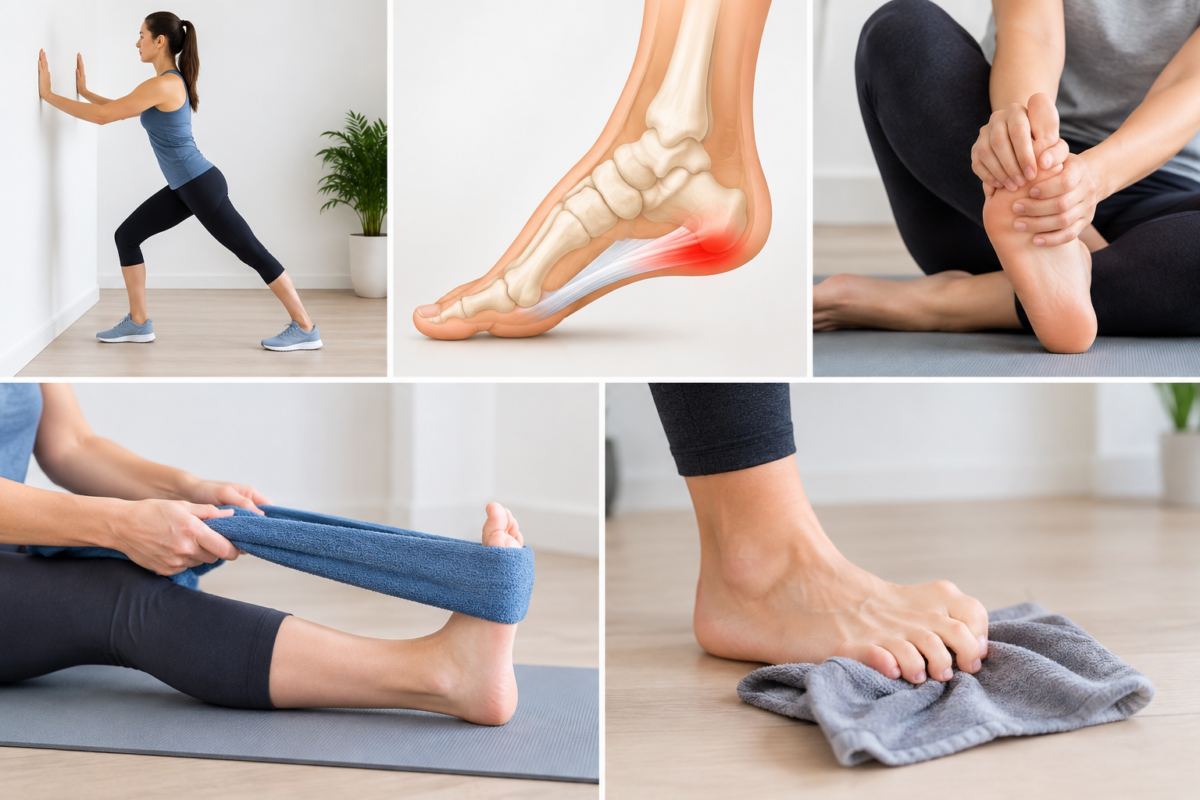
1. Calf Stretch

Stand facing a wall and place both hands against it. Step one foot backwards, keeping your heel on the floor and your back knee straight. Gently bend your front knee until you feel a stretch through the calf of your back leg. Hold for 20–30 seconds and repeat three times on each side. For enhanced results, consider pairing this with Short Foot Exercises 1 | Brighton Physiotherapist recommendations.

2. Plantar Fascia Stretch

Sit down and cross the affected foot over your opposite knee. Gently pull your toes back towards your shin until you feel a stretch along the sole of your foot. Hold for 10 seconds and repeat 8–10 times. Incorporating Short Foot Exercises 1 | Brighton Physiotherapist methods can further support your recovery.

3. Towel Stretch

Sit with your legs extended and place a towel or exercise band around the ball of your affected foot. Gently pull the towel towards you while keeping your knee straight. Hold for 20–30 seconds and repeat three times.

4. Toe Curls

Place a small towel on the floor and use your toes to scrunch it towards you. This simple exercise can strengthen the muscles supporting your foot and arch. Perform 10–15 repetitions.

When Should You Seek Professional Help?

If heel pain persists despite regular stretching and strengthening, professional assessment can help identify contributing factors. A qualified chiropractor in Brighton can assess your feet, ankles, hips and movement patterns and provide advice tailored to your needs. Moreover, some people find Short Foot Exercises 1 | Brighton Physiotherapist video guides helpful in improving their outcomes.

Remember to introduce exercises gradually and stop if they cause significant or worsening pain. With appropriate exercises, footwear advice and professional guidance where needed, many people can effectively manage plantar fasciitis and return to comfortable everyday movement.
Calf foam Rolling | Brighton Physiotherapist

Calf Foam Rolling for Better Mobility and Foot Health

Calf foam rolling is a simple self-care technique that may help improve lower-leg mobility and ease muscular tightness. For many, Calf foam Rolling | Brighton Physiotherapist techniques can be especially helpful when added to a regular stretching and strengthening routine to support better movement.

Why Roll Your Calves?

The calf muscles connect the knee to the heel and play an important role in walking, running. In fact, Calf foam Rolling | Brighton Physiotherapist advice often includes addressing tight calves, because when the calves feel tight, ankle movement can become restricted, potentially changing how the foot moves and loads during activity. Foam rolling provides a form of self-massage that can temporarily reduce feelings of tightness and improve range of movement.

How to Foam Roll Your Calves

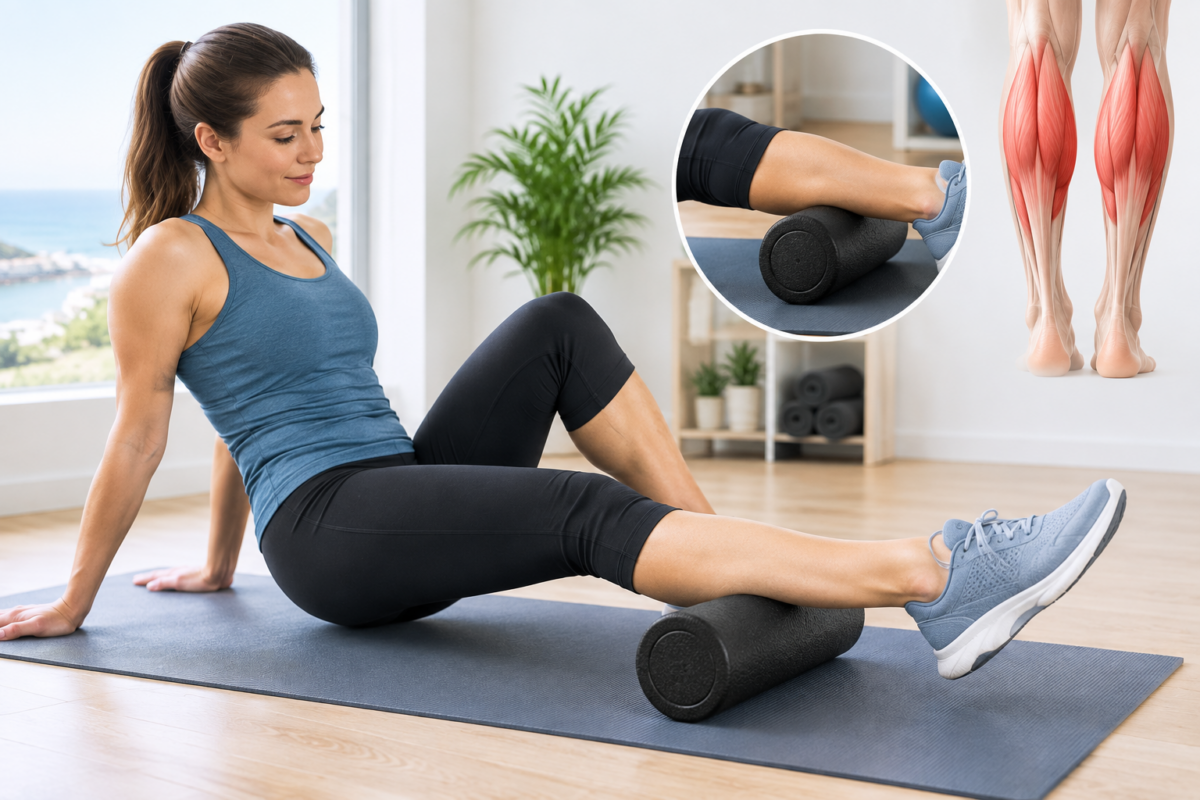
Sit on the floor with your legs extended and place a foam roller underneath one calf. Lift your hips and slowly roll from just above the ankle towards the lower knee. Move gradually, spending extra time on areas that feel tight.

Try rolling for around 30–60 seconds on each calf. Keep the pressure comfortable and avoid rolling over the knee joint, ankle bones or any painful area. Adjust the pressure by placing less body weight on the roller or using both legs together.

Foam Rolling and Foot Pain

Calf foam rolling may be useful alongside exercises for people dealing with plantar fasciitis or general foot stiffness. Importantly, Calf foam Rolling | Brighton Physiotherapist recommendations suggest it should not be considered a standalone treatment. A combination of appropriate exercises, activity modification, footwear advice and professional assessment may be more effective.

When to See a Chiropractor in Brighton

If calf tightness, heel pain or foot discomfort continues, a qualified chiropractor in Brighton can assess your movement, muscles and joints to identify factors contributing to your symptoms. At a Brighton chiropractic clinic, treatment and exercise advice can be tailored to your needs. In summary, seeking Calf foam Rolling | Brighton Physiotherapist guidance can be a valuable addition to your foot health routine.

Foam rolling should feel manageable, not sharply painful. Stop if symptoms worsen and seek professional advice when persistent pain affects daily activities.

Plantar Fascia Stretch Variations | Brighton Physiotherapist

Plantar Fascia Stretch Variations for Heel Pain Relief

Plantar fascia stretches can be a useful part of managing foot and heel discomfort associated with plantar fasciitis. Regular stretching may help improve flexibility through the sole of the foot, calf and ankle, supporting more comfortable everyday movement. For those searching for Plantar Fascia Stretch Variations | Brighton Physiotherapist, these simple variations can be performed at home. If you are looking for plantar fasciitis exercises in Brighton, these simple variations can be performed at home.

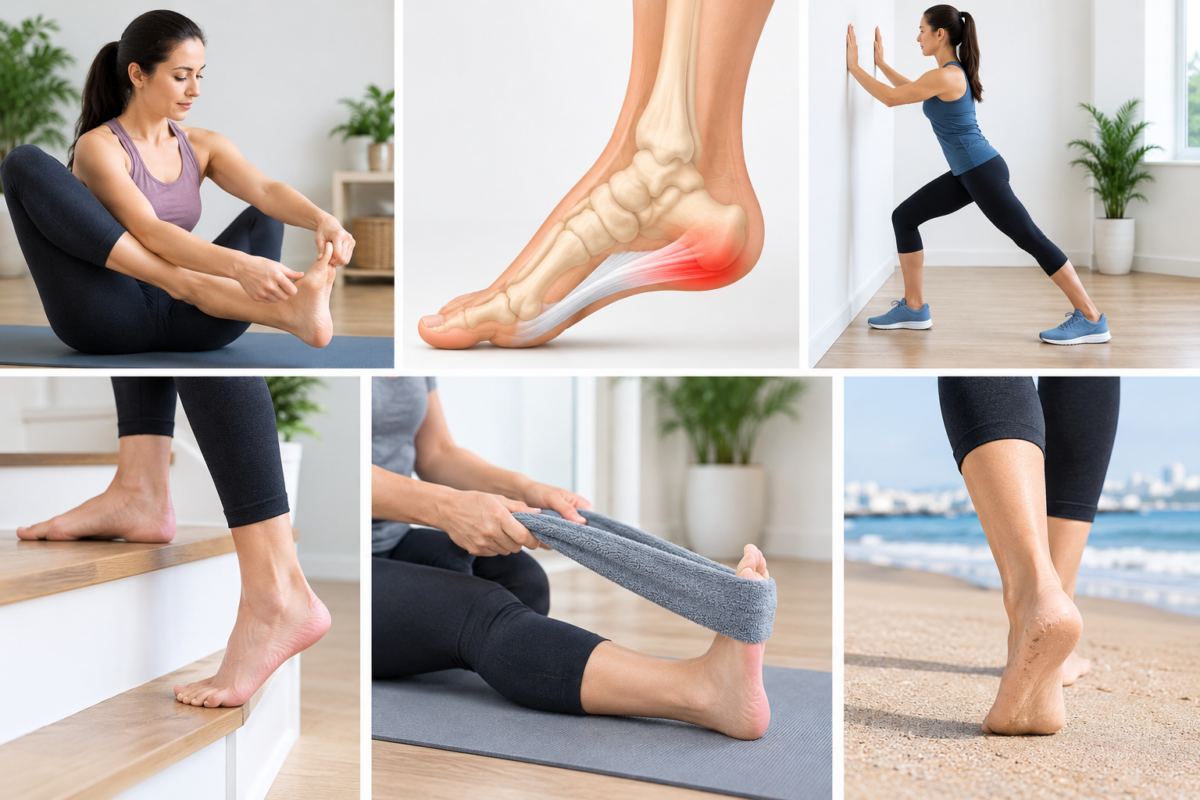
Seated Plantar Fascia Stretch

Sit comfortably and cross the affected foot over your opposite knee. Hold the toes and gently pull them towards your shin until you feel a mild stretch along the sole of your foot. Hold for 10–15 seconds and repeat several times. This is particularly useful before taking your first steps in the morning. Many Plantar Fascia Stretch Variations | Brighton Physiotherapist recommend this as a useful way to relieve morning stiffness.

Standing Calf and Plantar Fascia Stretch

Stand facing a wall with your hands supported against it. Place the affected leg behind you, keeping the heel on the floor. Slowly bend your front knee while keeping your back leg straight. You should feel a stretch through the calf and heel. Hold for 20–30 seconds and repeat three times. The standing Plantar Fascia Stretch Variations | Brighton Physiotherapist method is particularly helpful for tight calves.

Step Stretch

Stand on the edge of a step while holding a secure support. Allow one heel to gently lower below the level of the step until you feel a comfortable stretch through the calf and foot. Avoid bouncing or forcing the movement. With Plantar Fascia Stretch Variations | Brighton Physiotherapist, this step method is often recommended to increase range of motion.

Towel-Assisted Stretch

Sit with your leg straight and loop a towel around the ball of your foot. Gently pull the towel towards you while keeping your knee extended. Hold for 20–30 seconds and repeat three times on each side.

When to Seek Professional Advice

Stretching should feel gentle rather than sharply painful. If heel pain persists, worsens or affects your normal activities, professional assessment may be appropriate. A qualified Brighton chiropractor can assess your foot, ankle and overall movement patterns and recommend an exercise programme suited to your needs.

Combining appropriate stretching with strengthening, activity modification and suitable footwear may help support long-term foot health and mobility.

Standard Off Step Calf Raises | Brighton Physiotherapist

Unlocking Better Posture: How Off-Step Calf Raises Support Your SpineStandard Off Step Calf Raises | Brighton Physiotherapist are a key exercise many professionals recommend for posture and calf strength.

When people think of chiropractic care in Brighton, spinal adjustments and lower back relief are usually top of mind. However, full-body wellness begins from the ground up. The health of your feet and ankles directly dictates your pelvic alignment and spinal posture. One simple yet transformative exercise frequently recommended by chiropractors is the Standard Off-Step Calf Raise. In fact, Standard Off Step Calf Raises | Brighton Physiotherapist are often highlighted for their role in foundational postural health.

Why Off-Step Calf Raises Matter

Unlike flat-ground calf raises, performing this movement off the edge of a step allows for a full range of motion. By lowering your heels below the footplate, you deep-stretch the gastrocnemius, soleus, and Achilles tendon before contracting them through the full concentric lift. Therefore, Standard Off Step Calf Raises | Brighton Physiotherapist can make a distinct impact on flexibility and joint health.

From a biomechanical perspective, strong calves stabilize the ankle joint. When ankle mobility or lower leg strength is compromised, the body compensates. This can lead to overpronation (flat feet), altered gait patterns, knee strain, and ultimately pelvic misalignments that cause chronic lower back discomfort.

How to Perform the Standard Off-Step Calf Raise

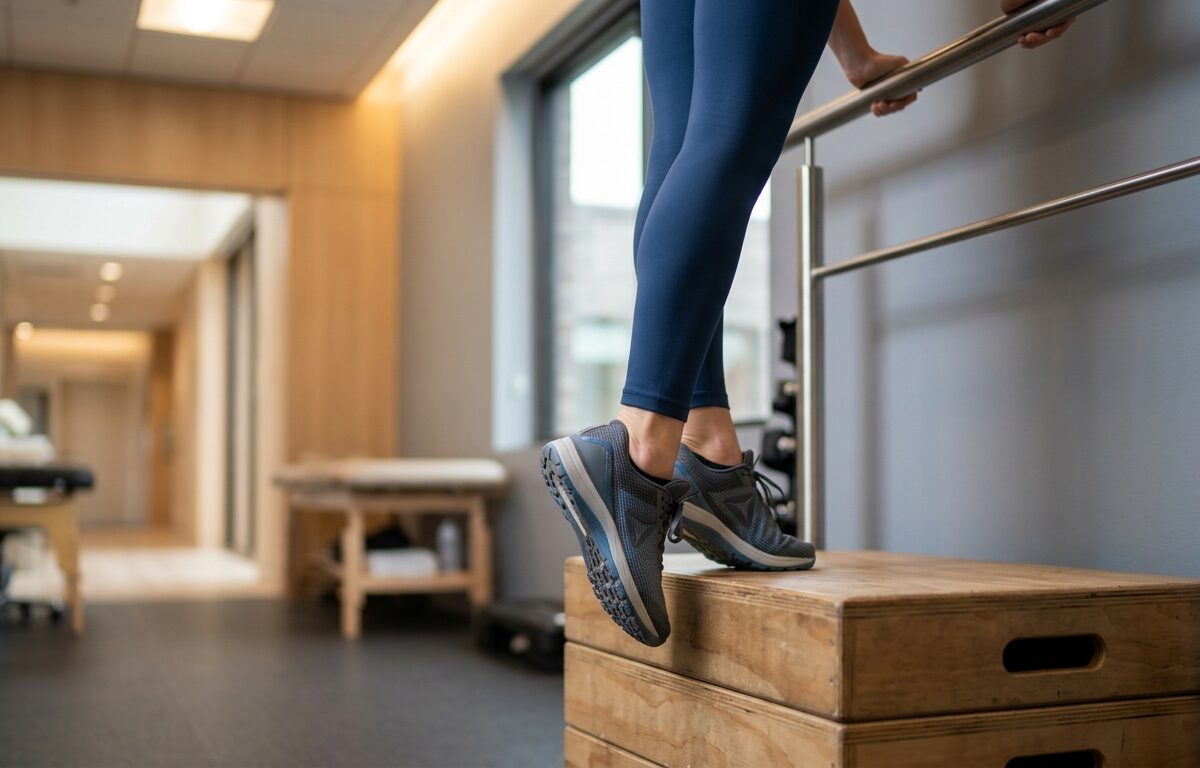
  1. Setup: Stand with the balls of your feet on the edge of a sturdy step or block, letting your heels hang freely. Hold onto a wall or railing for balance.
  2. The Stretch: Slowly drop your heels below step level until you feel a deep, comfortable stretch in your calves. Hold for a brief pause.
  3. The Lift: Press through the balls of your feet, driving your body straight upward onto your toes as high as possible. Squeeze your calf muscles at the peak.
  4. Repetition: Perform 3 sets of 12–15 controlled repetitions daily.

Comprehensive Chiropractic Care in Brighton

Whether you are navigating Brighton’s steep South Downs trails or tackling daily urban commutes, maintaining lower-limb strength protects your entire musculoskeletal system. Standard off-step calf raises strengthen the lower kinetic chain, relieving pressure on the plantar fascia and stabilizing your base. Standard Off Step Calf Raises | Brighton Physiotherapist can be included as a core exercise in both physiotherapy and chiropractic plans for optimal results.

Pairing targeted rehab exercises with professional chiropractic adjustments ensures your joints remain balanced and resilient. Book an assessment with a local Brighton chiropractor today to build a personalized movement plan. Moreover, incorporating Standard Off Step Calf Raises | Brighton Physiotherapist into your routine can help to enhance your mobility and stability over time.

Single Leg Calf Raises | Brighton Physiotherapist

Single Leg Calf Raises: A Simple Exercise for Stronger, Healthier Legs

Single leg calf raises are a simple but effective exercise for building strength, stability and mobility in the lower legs. Whether you enjoy running along Brighton seafront, playing sport or simply want to improve everyday movement, strengthening the calf muscles can support healthy foot and ankle function.

What Are Single Leg Calf Raises?

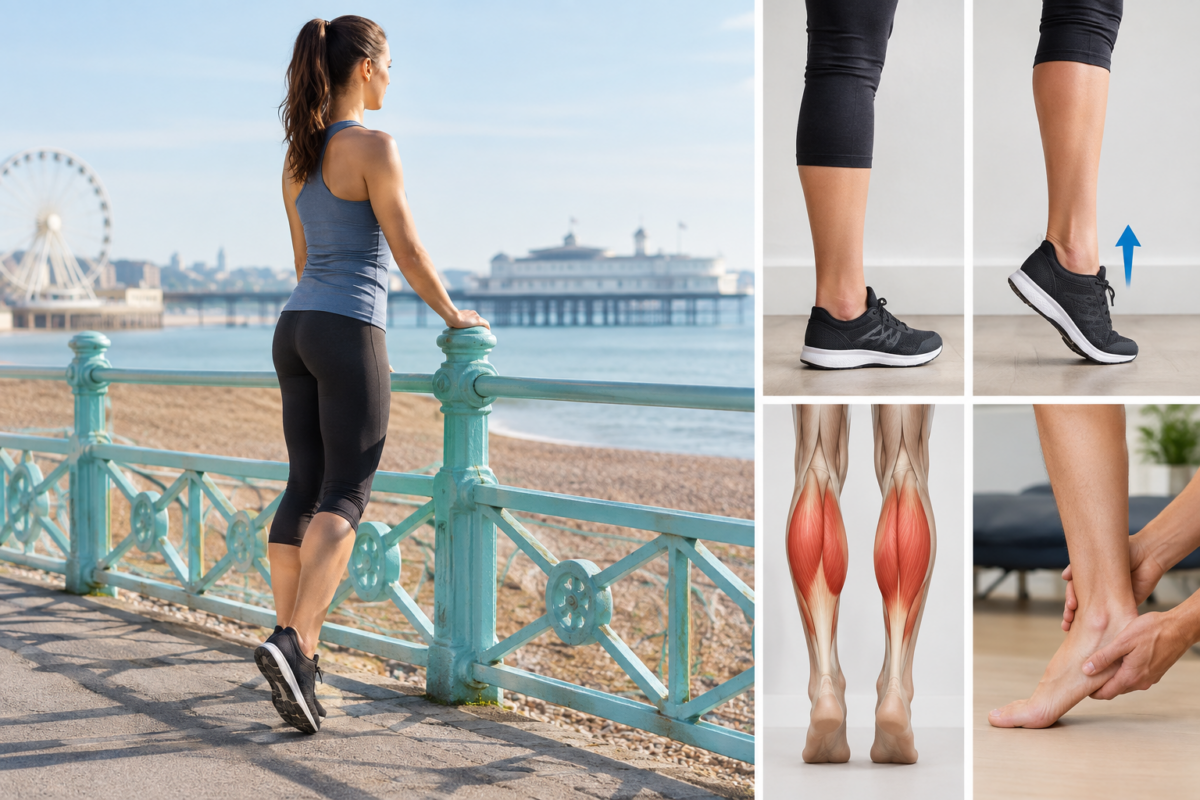
A single leg calf raise involves standing on one foot and slowly raising your heel from the floor before lowering it with control. The movement primarily targets the gastrocnemius and soleus muscles, while also challenging the muscles around the ankle and foot to maintain balance.

Because the exercise uses one leg at a time, it can highlight differences in strength, balance and control between the left and right sides.

How to Perform Them Safely

Stand upright near a wall or sturdy surface for support. Place your weight through one foot and keep your knee comfortably straight. Slowly lift your heel, pause briefly at the top, then lower your heel in a controlled manner. Avoid bouncing or allowing your ankle to roll outward or inward.

Start with a manageable number of repetitions and focus on quality rather than speed. If you experience pain rather than normal muscle fatigue, stop the exercise and seek appropriate professional advice.

Why Calf Strength Matters

Strong calves contribute to walking, running, jumping and pushing off through the foot. They also form an important part of the lower-limb kinetic chain, working alongside the feet, ankles, knees and hips.

If you have recurring calf, Achilles, foot or ankle discomfort, exercises should be selected according to your individual needs rather than simply copied from a generic programme.

Chiropractic Care in Brighton

At a Brighton chiropractic clinic, a chiropractor can assess your movement, discuss your symptoms and help identify appropriate exercises as part of an individualised approach to musculoskeletal care. Single leg calf raises may be included where suitable, alongside other strengthening and mobility exercises.

If you’re experiencing persistent lower-leg discomfort or want guidance on exercise technique, consider speaking with a qualified healthcare professional in Brighton.

Slow Eccentric Calf Raises | Brighton Physiotherapist

Slow Eccentric Calf Raises: A Simple Exercise for Stronger Calves

Slow eccentric calf raises are a simple exercise that can help improve calf strength, ankle control and lower-limb function. They are particularly useful for people recovering from certain lower-leg injuries or looking to improve movement and stability. If you experience persistent calf or ankle discomfort, a qualified chiropractor in Brighton can assess your movement and help determine whether this exercise is appropriate for you.

What Are Slow Eccentric Calf Raises?

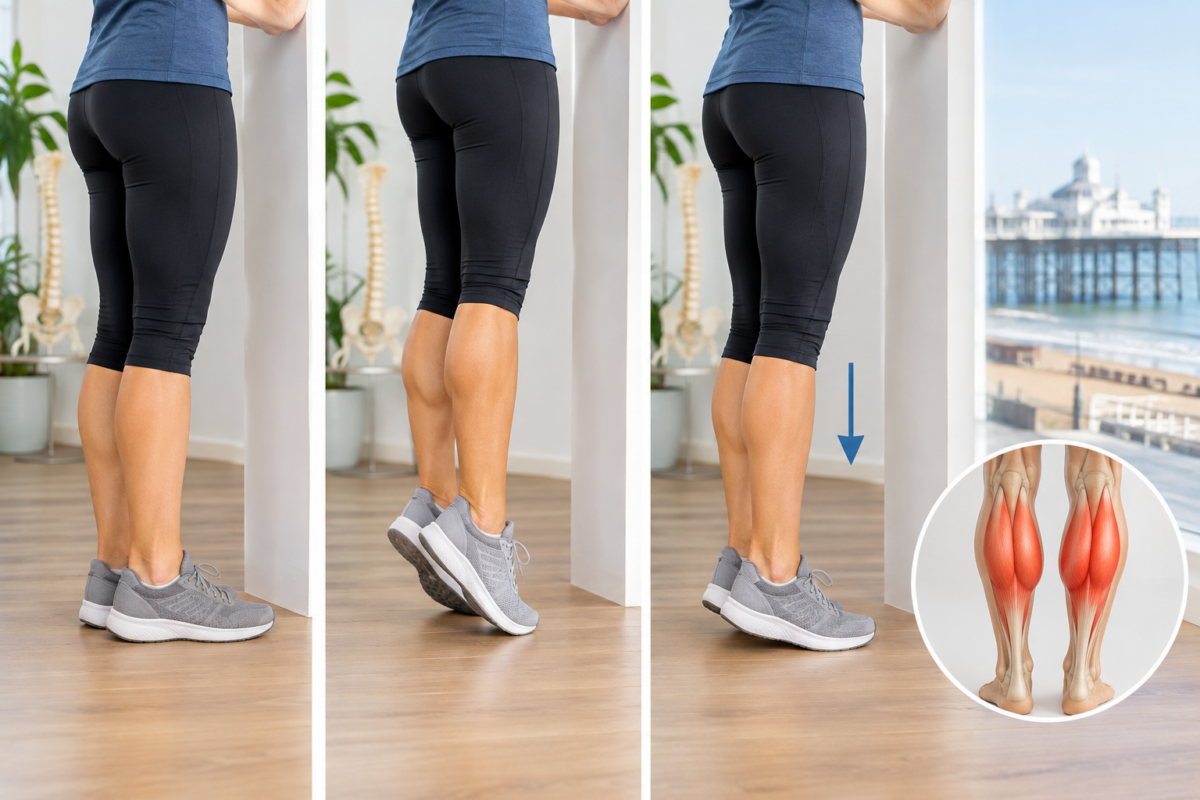
An eccentric movement occurs when a muscle lengthens while producing tension. During a slow eccentric calf raise, you lift your heels and then lower them gradually, placing controlled load through the calf muscles and Achilles tendon.

To perform the exercise, stand with your feet approximately hip-width apart and use a wall or stable surface for balance. Rise onto your toes, then slowly lower your heels over three to five seconds. Keep the movement controlled and avoid allowing your ankles to roll in or out. Start with both legs before progressing to a single-leg variation if appropriate.

Potential Benefits

Adding slow eccentric calf raises to a structured exercise programme may help develop calf strength and improve tolerance to loading. Stronger calves can contribute to better ankle stability and efficient movement during activities such as walking, running and climbing stairs.

The exercise is also commonly incorporated into rehabilitation programmes for certain Achilles tendon and calf-related problems. However, the right exercise, number of repetitions and progression depend on the individual and their symptoms.

Getting Professional Advice in Brighton

If you have ongoing calf pain, Achilles discomfort, ankle stiffness or a sports-related injury, it is important to understand the underlying cause rather than simply exercising through pain. A Brighton chiropractor can assess your movement, discuss your symptoms and create an appropriate rehabilitation plan where suitable.

Slow eccentric calf raises can be a useful addition to many exercise routines, but technique and progression matter. If you’re unsure whether they are right for you, seek personalised advice before increasing the load or intensity.